
Dry heat
Grilling, roasting, pan-frying and baking: fast browning and surface dehydration.
Every cooking method is a different way of controlling heat, moisture and time. A hot pan can create a dry, browned crust while a water bath cooks gently and evenly. Pressure raises the boiling point of water; steam surrounds food with moist heat; microwaves excite water molecules within the food. Understanding those differences helps you choose the right technique instead of relying on rules alone.
← Back to Cooking Science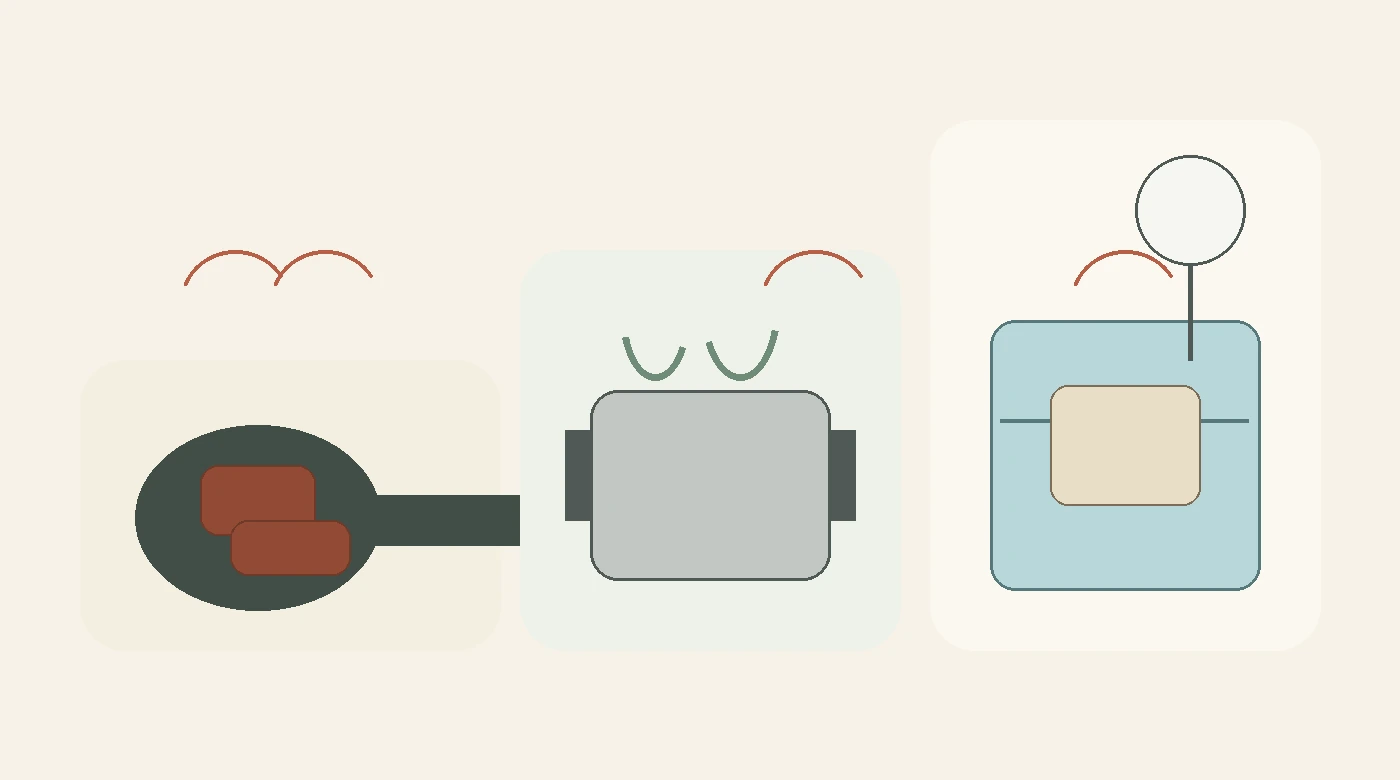
Start with the question or ingredient behavior you want to understand. These launch topics are editorial overviews until real child guides are published.
Grilling, roasting, pan-frying and baking: fast browning and surface dehydration.
Poaching, steaming and simmering: gentler heat and better moisture retention.
Slow cooking and braising for collagen-rich cuts and long transformations.
Sous vide and controlled-temperature cooking for even doneness.
Higher pressure, higher boiling temperature and faster extraction.
Fast dielectric heating with specific strengths and limits.
Match thickness, fat, connective tissue, starch and desired texture to technique.
Every cooking method is a different way of controlling heat, moisture and time. A hot pan can create a dry, browned crust while a water bath cooks gently and evenly. Pressure raises the boiling point of water; steam surrounds food with moist heat; microwaves excite water molecules within the food. Understanding those differences helps you choose the right technique instead of relying on rules alone.
Explore all eleven hubs and move between ingredients, methods, equipment and core food-science principles.