
Egg science
Freshness, poaching, boiling, scrambling and coagulation.
Eggs and dairy are exceptionally versatile because their proteins, fats and emulsifiers can form foams, gels, sauces and stable mixtures. Heat sets egg proteins, lecithin helps oil and water mix, milk proteins react differently to heat and acid, and microbes transform milk into yogurt and cheese.
← Back to Cooking Science
Start with the question or ingredient behavior you want to understand. These launch topics are editorial overviews until real child guides are published.
Freshness, poaching, boiling, scrambling and coagulation.
Mayonnaise and the role of egg-yolk lecithin.
How beaten egg whites trap air and why fat interferes.
Pasteurization, skin formation, fat levels and curdling.
Protein networks, emulsification, freezing and crystal size.
Yogurt cultures, acidity and texture.
Curds, aging, melting behavior and cheese structure.
Five guides explain how milk becomes cheese, why aroma develops, why mozzarella stretches, how cheeses melt differently and how fresh acid-set cheese forms.
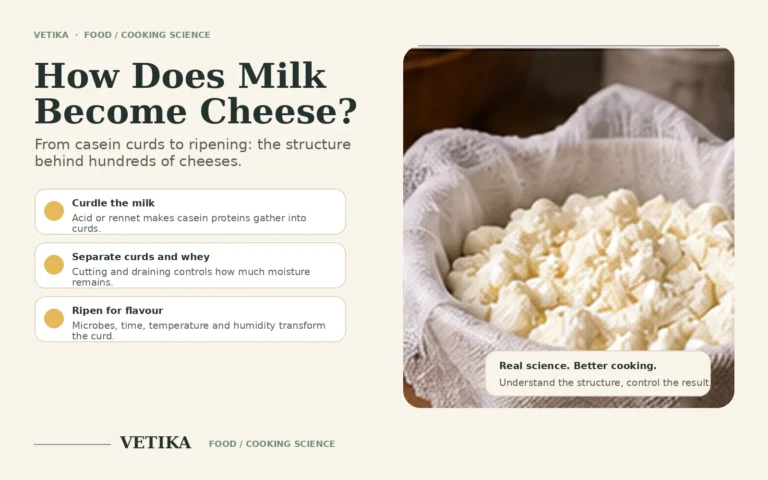
Milk becomes cheese when casein proteins form curds, whey is drained and microbes reshape flavour during ripening. See the whole transformation clearly.
Read guide →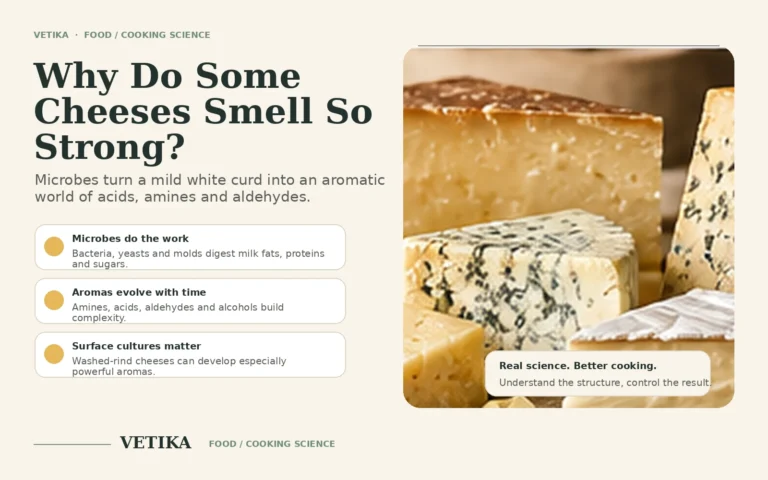
Strong-smelling cheese gets much of its aroma from microbes breaking down proteins and fats into acids, amines, aldehydes and other volatile compounds.
Read guide →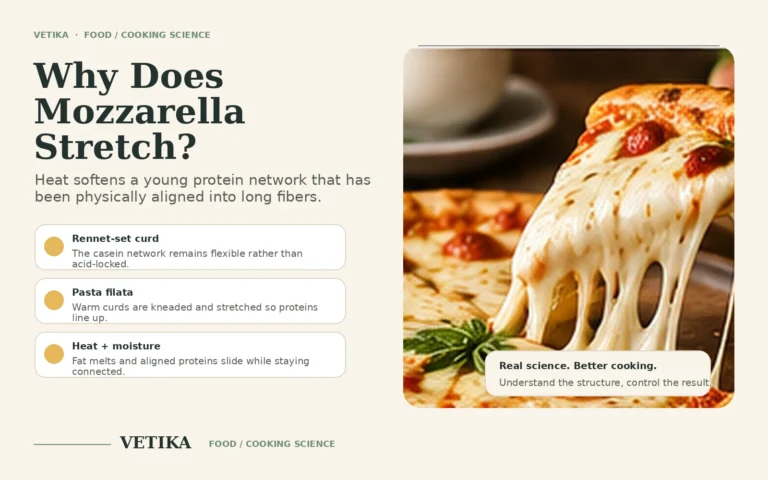
Mozzarella stretches because its casein proteins are aligned during pasta filata processing, then soften and slide when heated while remaining connected.
Read guide →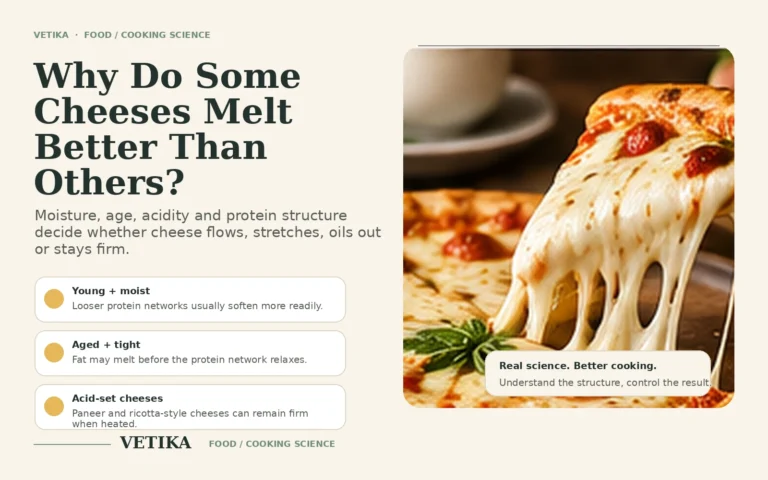
Cheese melting depends on moisture, age, fat, acidity and the casein protein network. Learn why mozzarella stretches, cheddar can oil out and paneer stays firm.
Read guide →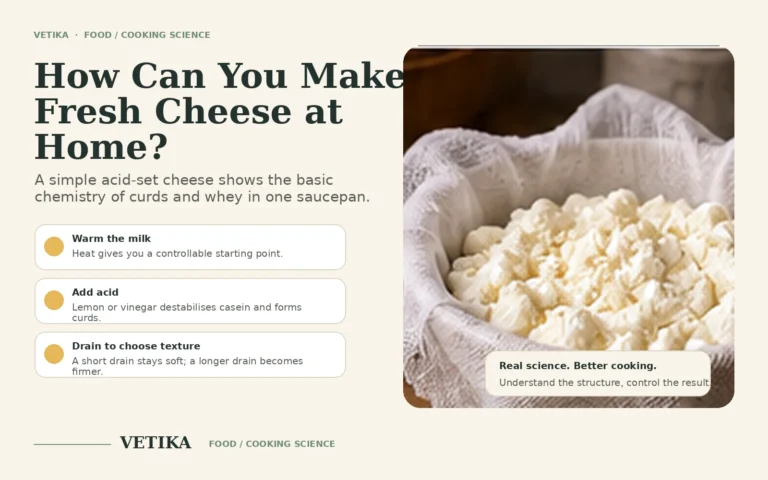
Make a simple ricotta-style fresh cheese by warming milk, adding acid and draining the curds. Learn exactly why the milk separates and how draining changes texture.
Read guide →Five practical guides connect timing, temperature and protein behavior to poaching, soft-boiled eggs, scrambled eggs, custard and yogurt sauces.
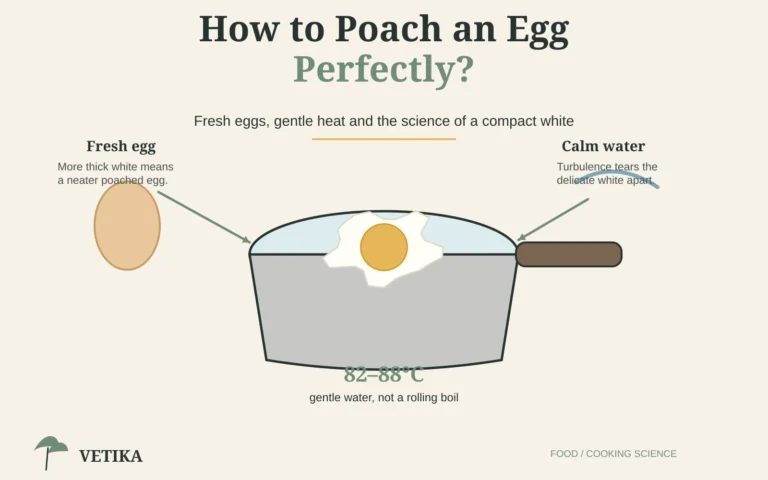
Fresh eggs, gentle water and careful timing make poaching far more reliable. Learn why eggs spread, what vinegar does and how to get a neat poached egg.
Read guide →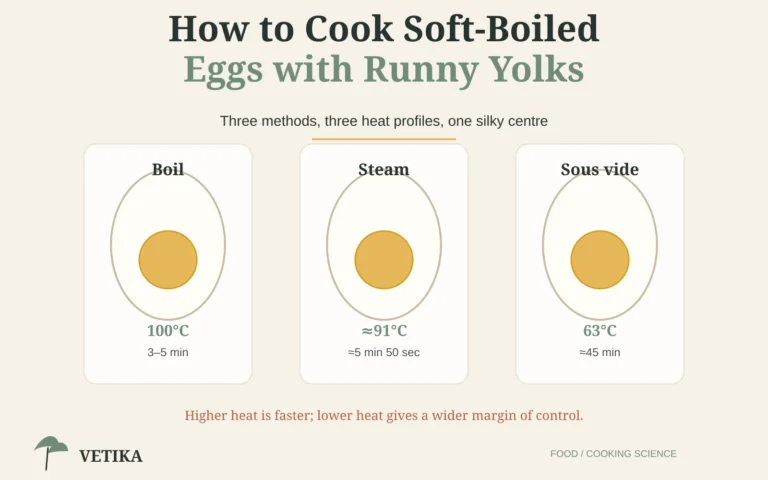
Why can the white set while the yolk stays runny? Compare boiling, steaming and sous vide, and learn the temperatures that control soft-boiled eggs.
Read guide →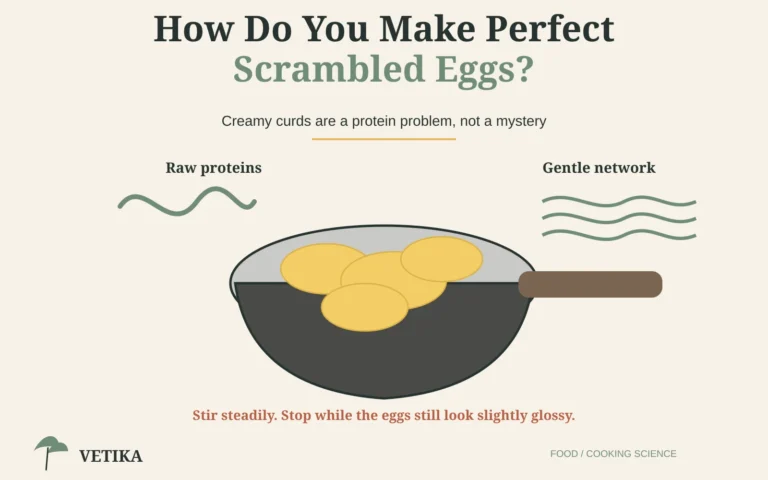
Creamy scrambled eggs come down to protein coagulation, heat and timing. Learn why eggs turn rubbery, why stirring matters and when to stop cooking.
Read guide →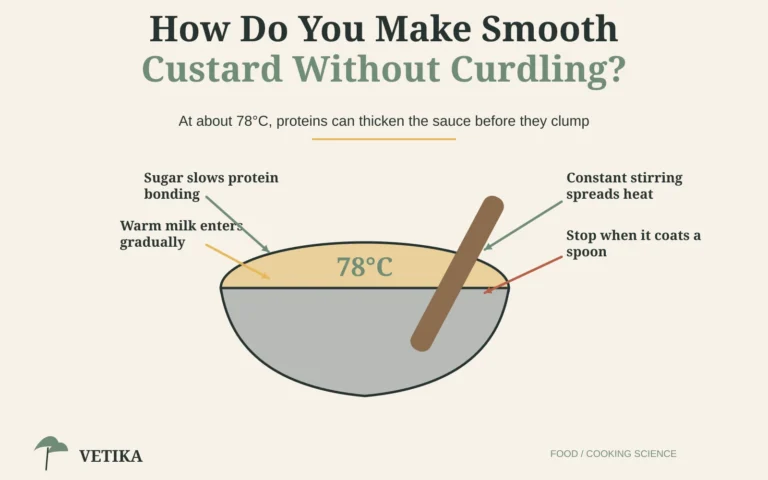
Custard thickens when egg proteins form a delicate network. Learn why custard curdles, how tempering works and why about 78°C is the key stopping point.
Read guide →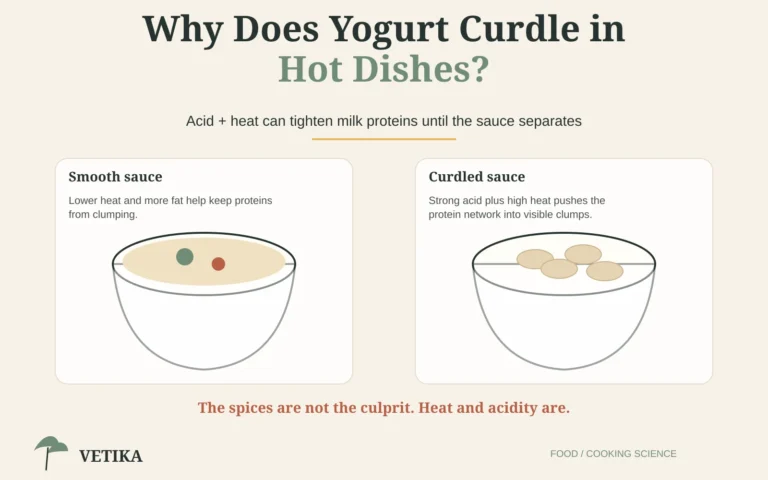
Yogurt curdles when acid and heat push milk proteins into clumps. Learn why it happens, why full-fat yogurt is more stable and how to keep sauces smooth.
Read guide →Five practical guides connect emulsions, egg structure, foam and heated milk to the science behind everyday cooking.
Mayonnaise breaks when its tiny oil droplets can no longer stay dispersed. Learn why it happens, how emulsions work and how to rescue split mayonnaise.
Read guide →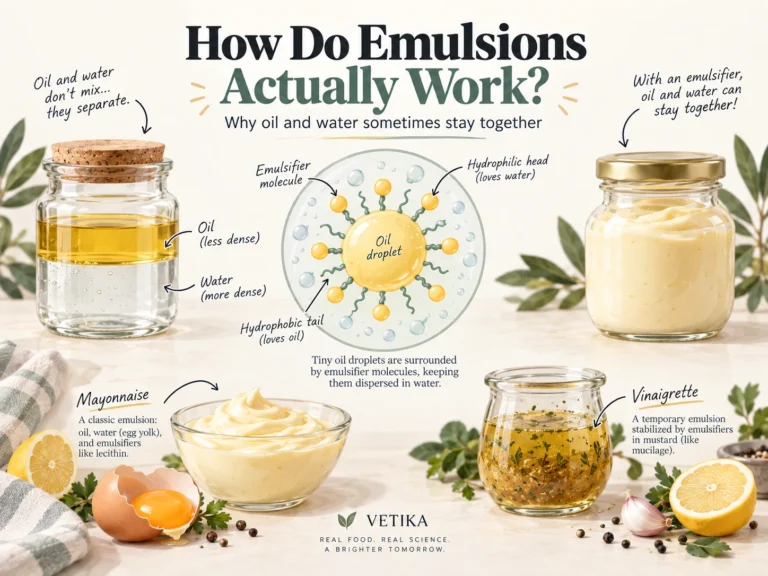
Oil and water naturally separate, yet mayonnaise, milk and vinaigrette can hold together. Learn what emulsions are, how emulsifiers work and why they break.
Read guide →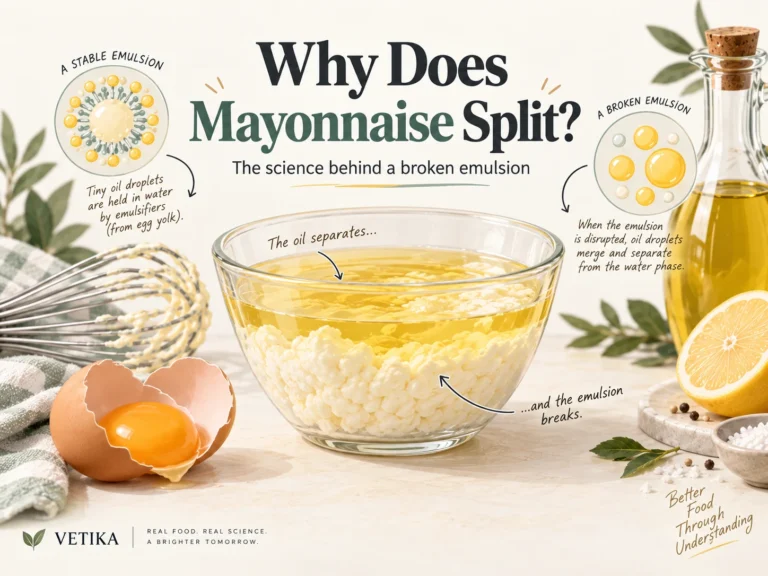
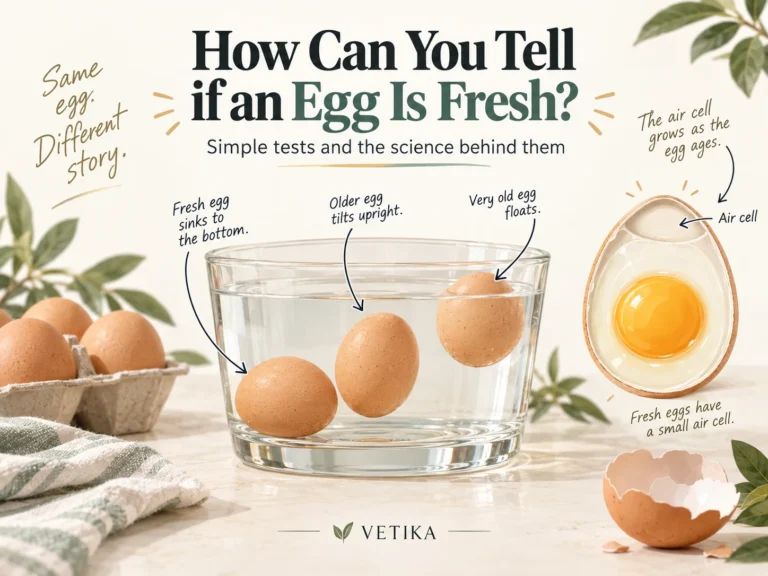
From the float test to cracking the egg open, here is how to tell if an egg is fresh, what changes as it ages and what those changes actually mean.
Read guide →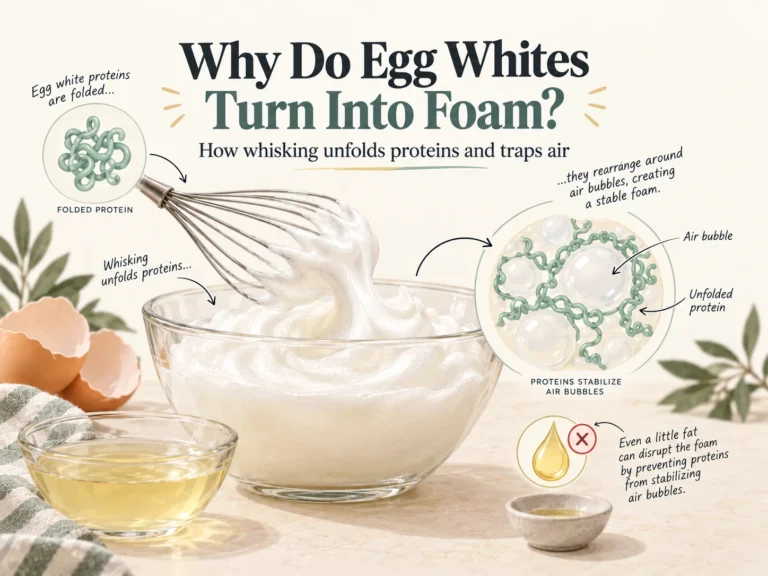
Egg whites turn into foam when whisking unfolds proteins that gather around air bubbles. Learn how the foam forms, what can ruin it and how to get better volume.
Read guide →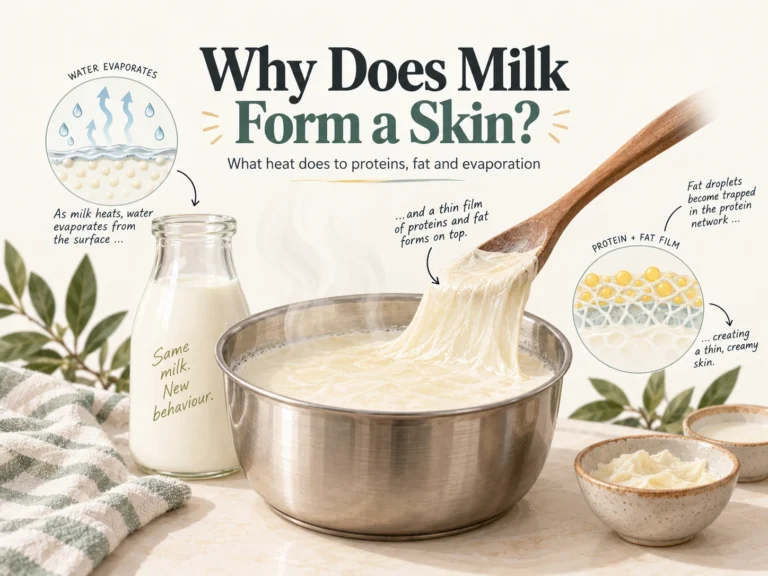
Milk skin forms when evaporation concentrates proteins and fat at the surface. Learn why it happens, what the skin is made of and how to reduce it if you want to.
Read guide →Eggs and dairy are exceptionally versatile because their proteins, fats and emulsifiers can form foams, gels, sauces and stable mixtures. Heat sets egg proteins, lecithin helps oil and water mix, milk proteins react differently to heat and acid, and microbes transform milk into yogurt and cheese.
Explore all eleven hubs and move between ingredients, methods, equipment and core food-science principles.